Twelve People, Three Words, and the Homepage Copy I Finally Heard
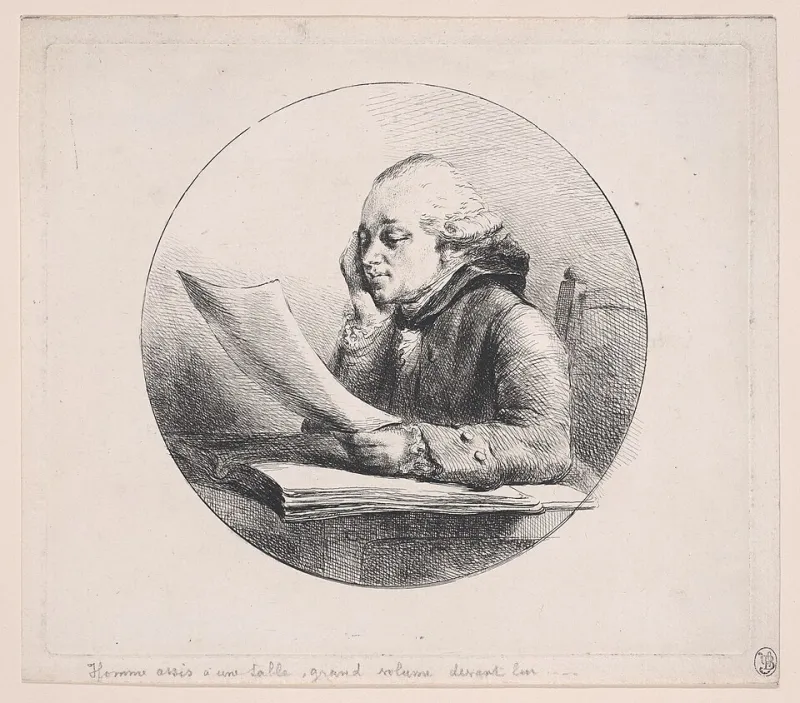
Photo: Vivant Denon, CC0, via Wikimedia Commons
I have rewritten my homepage more times than I have finished a project. That is not a humblebrag. It is a diagnosis. The copy gets tweaked, polished, softened, made “strategic,” and then I close the tab and go make something else. So this fall I tried a different edit: I asked twelve people to describe my work in exactly three words.
No context. No prompts beyond that. Just a link and a rule.
The Rules (and the One Person Who Cheated)
I sent the same message to twelve people: clients, casual readers, a couple of friends who know the work well, and one friend who has never opened my site in her life. The ask was simple: “Open this link. Tell me what I make in three words. Exactly three. No explanations.”
Eleven people followed the rules. One sent a paragraph and a voice memo, which is honestly the most on-brand response I could have received. I counted her first three words and saved the rest for later.
The point was not to gather testimonials. The point was to catch the difference between the story I think I am telling and the story that actually lands.
What Came Back
Here is the unedited pile, minus names:
- “clear, warm, fast”
- “specific, odd, useful”
- “honest, unfinished, human”
- “writer, maker, mystery”
- “thoughtful, scrappy, direct”
- “funny, sharp, real”
- “polished, personal, practical”
- “messy, generous, alive”
- “editor, builder, questioner”
- “calm, curious, deadline”
- “story, system, sigh”
- “unfinished, on purpose, again”
I read them twice. The first time, I felt smug. The second time, I felt caught.
Some of it matched exactly what I want to be true. “Specific,” “honest,” “useful,” “funny,” “scrappy,” “personal” — yes. I will take all of those. I want to be the person who makes the weird, practical thing and tells you the truth about how it went.
But other words pointed at something I have been avoiding. “Unfinished” showed up twice. “Mystery” showed up once. “Sigh” showed up once, and I have decided not to ask follow-up questions about that one. The people who know my work do not see a polished, end-to-end creative machine. They see a person who starts a lot, shares the middle, and sometimes disappears into the back room with a half-built idea.
That is not a branding crisis. It is information.
Reading My Homepage Out Loud
The next part was worse. I opened my homepage and read the copy aloud in my kitchen, which is where all my worst realizations happen.
My headline said something about being a “multi-hyphenate creative” who “brings ideas to life through story-driven strategy and end-to-end execution.” I got through it once. Then I tried again in the voice of the friend who has never opened my site. I lasted four words before laughing.
Here is what I noticed: the three-word answers sounded like a person. The homepage sounded like a pitch deck that had been left in the sun.
“Multi-hyphenate” did not show up in anyone’s three words. Neither did “end-to-end.” Nobody said “strategic partner.” Nobody said “elevated.” One person said “mystery,” which is close to “multi-hyphenate” if you squint, but not in a good way.
The words that matched — warm, specific, honest, useful, funny, unfinished — were all plain. They were things a human being might say about another human being’s work. They were not things a committee would approve.
The Phrases I’m Retiring in 2026
So I am making a small, public edit for 2026. I am retiring a few phrases from my site because they are doing the opposite of what I want them to do. They are not lies. They are just fog.
First to go: “multi-hyphenate.” I have never once described a person I admire that way, and I do not want to start now.
Second: “bring ideas to life.” It sounds lovely and means almost nothing. Everything brings an idea to life. A napkin brings an idea to life. I need to say what I actually do: I write, I design, I build small things, I finish some of them, and I tell you what happened.
Third: “end-to-end execution.” I understand why I wrote it. It signals that I can carry a project from start to finish. But it also makes me sound like a software platform. I would rather say, “I can take it from a messy note to a real thing, and I will tell you where it gets stuck.” That is longer, but it is true.
Fourth: “story-driven.” I love a story. I do not love the phrase. It is the verbal equivalent of a beige throw pillow. I am replacing it with plain sentences about what I make and who it is for.
The word I am keeping — carefully — is “unfinished.” It came up twice, unprompted, from people who know the work. I could treat that as a wound. I am choosing to treat it as the actual texture of what I do. The site is called a portfolio of writing, projects, and half-finished ideas. If the homepage sounds like a finished, polished, frictionless machine, then the homepage is lying.
What I’m Doing With This
I am not rebuilding the whole site tonight. I am doing the smaller, harder thing: replacing the fog with sentences that sound like me and match what people actually see. I am keeping a list of the three-word answers next to my draft copy. When a sentence sounds too smooth, I read it out loud and ask whether any of those twelve people would ever say it about me.
Most of the time, the answer is no. That is the edit.
The gap between how I describe my work and how it lands is not a failure. It is the most useful feedback I have gotten in years. It is also a little embarrassing, which is how I know it is real. Twelve people gave me three words each. I gave them a homepage that needed a rewrite. In 2026, I am trying to close the distance.