Twenty-Three Postcards, One Rule: How I Learned to Quit on Purpose
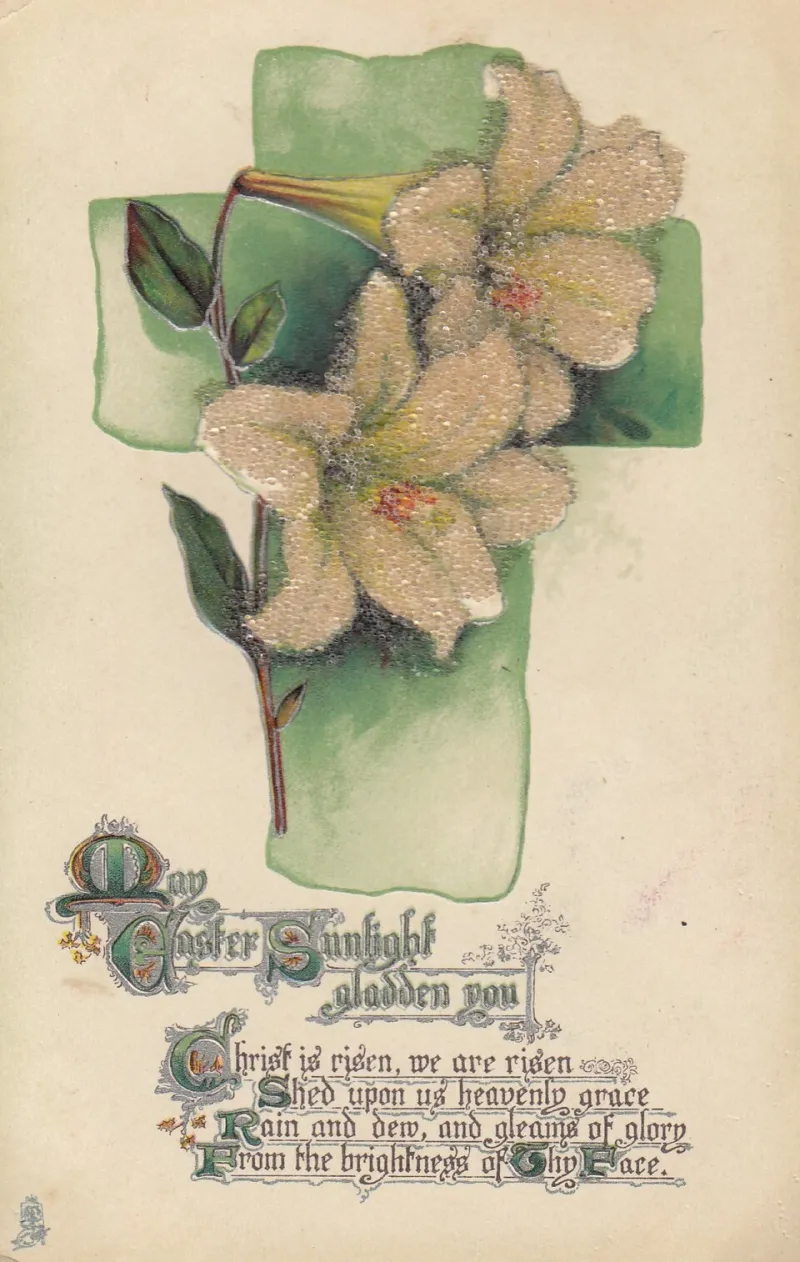
Photo: Raphael Tuck and Sons, Public domain, via Wikimedia Commons
There is a spinning rack of postcards near the checkout at the pharmacy on my street. Sixty cents each, sometimes seventy-five if I spring for the ones with the slightly thicker cardstock. I have bought so many in the last six months that the woman at the register has stopped asking if I'm traveling.
I'm not traveling. I'm about to say yes to something, and the postcard is how I slow myself down.
It started as a joke on myself. I had just agreed to a project I had no business agreeing to — a branding refresh for a friend of a friend, timeline vague, scope vaguer — and about four days in, I already wanted out. Not because the work was bad. Because I couldn't remember why I'd said yes. There was no record of my own reasoning. Just a Slack thread and a vague sense of obligation.
So I started writing things down before the yes, not after.
The Three Lines I Write Before I Say Yes
The format has barely changed since the first one. On the back of the card, in ballpoint, I write three things:
- What I hope this becomes.
- What I'm afraid it will expose about me.
- The one condition under which I'm allowed to quit.
That's it. No timeline, no deliverables, no budget. The postcard isn't a contract. It's a witness.
The first line is usually easy and a little embarrassing. I hope this becomes the essay that finally says the thing. I hope this becomes a client who comes back. I hope this becomes the project that proves I can do deadlines like a normal person. You can hear the wanting in it. That's the point.
The second line is the one that stings. I'm afraid it will expose that I don't actually know how to structure a book proposal. I'm afraid it will expose that I've been calling myself a writer without shipping much of anything. I'm afraid it will expose that I need the money more than I'm letting on. I've written some version of that last one at least five times.
The third line is the one that changed everything.
Why It Has to Go in the Mail
I could write this in a notebook. I've tried. The notebook version doesn't work, and I think I know why: a notebook entry is a note to nobody. A postcard goes to a mailbox. It comes back to me with a postmark on it, and a postmark is a small, official-looking thing that says this happened on this date, and you were there.
Also, mailing it buys me time. The card takes two to four days to come back. In those two to four days, the project either keeps feeling like a good idea or it starts to smell. About a third of the time, the card arrives and I read my own handwriting and think, oh, I was just bored that afternoon. That's worth seventy-five cents. That's worth seventy-five dollars, honestly, but the postcard is what I can afford.
What Six Months of Postcards Revealed
I counted them last week because of course I did. Twenty-three postcards between May and November. Nine of them correspond to projects I actually started. Six were things I wrote down and never began, which is its own kind of information. And eight were projects I began and then deliberately quit — deliberately, with the quit clause in hand, not the slow guilty fade I used to specialize in.
Eight clean quits in six months. Before this, I don't think I'd ever quit anything cleanly in my life. I quit things the way a houseplant dies: gradually, then all at once, with everyone pretending not to notice.
The nine starters were the ones where my hoped-for outcome was specific. Not I hope this is good — I hope this becomes a piece my sister reads and texts me about. Specific hopes survive the four-day mail delay. Vague hopes don't. Vague hopes are usually just the sound of me wanting to be admired.
The Quit Clause Is the Whole Point
Here's what I noticed about the clauses themselves. Early on, they were soft: I'm allowed to quit if it stops being fun. Every single project stops being fun around week three. A soft clause is not a clause, it's a mood.
The clauses that actually worked had a number or a date in them. If I've missed two check-ins in a row. If the client changes the scope more than twice without a change order. If I hit thirty hours and I still can't explain the project to a stranger in one sentence. Those held. I could point at them. I could say, this is the thing I said would happen, and it happened, and I'm allowed to leave.
It turns out I didn't need more discipline. I needed permission, granted in advance, in my own handwriting, with a stamp on it.
The Boredom Tell
One pattern I did not expect: the postcards I wrote in a burst of restless energy on a Tuesday afternoon — usually after a slow morning and a scroll through other people's launches — almost never became anything. The handwriting is different on those. Looser. More exclamation points. I hope this becomes SOMETHING BIG. I have learned to distrust my own exclamation points.
The postcards written quietly, on a Sunday, after I'd already been working on something for a week without telling anyone — those are the ones that stick. Those are the ones where the fear line is specific and the hope line is small and the quit clause is boring. Boring is a great sign.
What Lives in the Drawer Now
I keep the returned postcards in the top drawer of my desk, rubber-banded by month. It is not a system anyone would put in a productivity book. There's no color coding. Some of them are coffee-stained. One has a stamp from a post office I don't remember visiting.
But when I'm deciding whether to say yes to something new, I open the drawer. I read a card from a project that worked, then a card from one that didn't. The difference is almost never talent or luck. It's whether I knew, going in, what I was actually hoping for and what would count as enough.
Seventy-five cents. Two to four days in the mail. A little card that comes back saying, here is what you promised yourself. If you're the kind of person who says yes first and figures out the reasons later — and I very much am — I can't recommend it enough.